
Paerangi ki Venice is a collaborative project between Te Tuhi and CREA Cantieri del Contemporaneo, which brought a group of Māori artists to Italy for the vernissage of the 61st Venice Biennale.
The exhibition provides a significant platform for Aotearoa’s creative community, as expressed by Rotorua artist and weaver John Turi. “Ko taku waimaria kua tae mai ko tētahi tokowhā o ngā kaitoi e mahi ana i te taha o Paerangi. Me te mea nei kua tae mai anō ki tēnei rā whakahirahira ki te whakarewa i te kaupapa o Aotearoa,” hei tā John.
“Kei kōnei, kei Weneti me taku Waimarie ki te whai wāhi ki te kaupapa o Te Tuhi he kaupapa rangatira tēnei ki te awhi I ngā ringatoi te whakaatu ō rātou mahi ki te ao.”
The Venice Biennale, inaugurated in 1895, is the world’s oldest and one of its most prestigious international cultural exhibitions, focusing on contemporary art, architecture, music, theatre, film, and dance. The 61st International Art Exhibition (Biennale Arte 2026) ran from May 9 to November 22, 2026, with the theme “In Minor Keys”.
The Paerangi initiative is designed for four Māori artists – including John Turi, Neke Moa, Kiriyama Typa, Tiyakai, and Suzanne Tamaki interact with the local Venetian community.
“For this project we’ve brought a group of 4 Māori artists to the Guidecca which is an island of Venice to interact with the local community and to make work and share their work through activation and conversations,” says curator Karl Chitham.


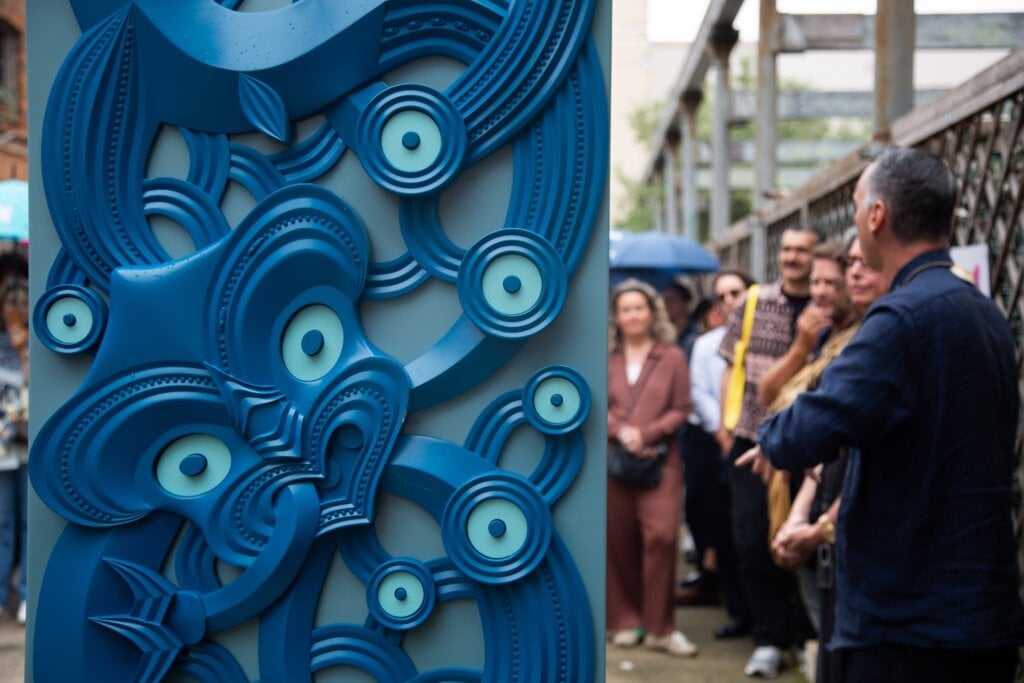


Photo Credit: Te Tuhi
The group is based on Guidecca, an island across the water from Venice’s main island. Artist (Ringatoi) Neke Moa described the nature of their presence, saying, “Te Tuhi presents Paerangi ki Venice, so we’re here on Guidecca which is across the water from Venice, the main island. We’re kind of the Gorilla outfit of the Biennale, we’ve come to hang out with the locals, to participate in any cultural activities that’s happening around us and also just to show Māori art ki te ao”.
Neke Moa, in particular, created work on site, making “beautiful neck pieces using local materials as well as kind of forage materials that she’s found”. Her artistic practice aims to connect with people through her taonga (treasures), with people wearing the adornments and moving around the area.
The 61st Biennale, which featured 99 participating countries, faced geopolitical tensions and was marked by the resignation of its jury due to the participation of Russia and Israel, putting increased focus on the structure of national pavilions. Despite the tumultuous atmosphere surrounding the main event, initiatives like Paerangi ki Venice showcase alternative cultural dialogues and international engagement outside the main exhibition halls.